Laparoscopic trocars rely heavily on silicone seals and valve plugs to ensure airtightness and surgical safety. However, the flexible characteristics of medical-grade silicone often lead to common mass production defects, including lip eversion, eccentric deformation, and sealing wrinkles during automatic assembly. These issues are long-standing bottlenecks in the medical device manufacturing industry, directly causing air leakage, poor sealing, and high scrap rates.
Our optimized automatic assembly equipment for trocar silicone plugs and rear covers specifically solves flexible silicone part deformation problems. With vacuum suction feeding, servo multi-stage slow pressing technology and profiled flexible tooling, the equipment achieves full-area support and stress-free assembly. It requires no modification to existing product molds, effectively reduces defective rates, and adapts to high-precision mass production of full-specification laparoscopic trocars.
Root Causes of Silicone Deformation in Traditional Trocar Assembly
Most conventional
automatic assembly equipment adopts one-time rapid hard pressing technology, which is incompatible with soft medical silicone materials. The instantaneous strong impact force cannot buffer the flexible silicone structure, easily causing lip collapse, stretching deformation and sealing surface wrinkles. In addition, inaccurate positioning and uneven force distribution lead to eccentric assembly and excessive fitting gaps.
These defects not only reduce product qualification rate and airtight stability but also bring continuous production losses: high manual rework volume, soaring material scrap costs, unstable daily output, and difficulty in meeting strict medical batch production standards.
Core Optimization Technologies for Trocar Silicone Assembly
1. Vacuum Flexible Suction Feeding, Zero Clamping Damage
Different from rigid mechanical clamping that easily dents and twists silicone parts, our equipment adopts customized vacuum suction structure. It fully fits the surface of trocar silicone plugs and seals for uniform stress transfer, realizing damage-free feeding and transportation. Equipped with high-precision limit positioning, it eliminates material offset and shaking, laying a foundation for subsequent precise assembly.
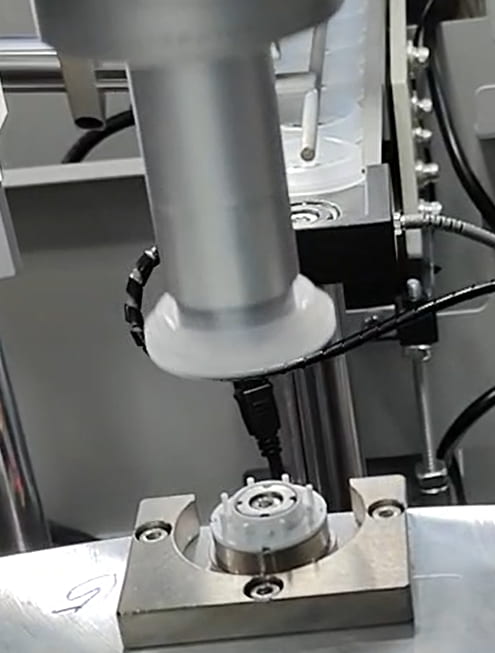
2. Servo Multi-Stage Slow Pressing Process, Avoid Instant Assembly Stress
As the core optimization highlight, the servo segmented pressure control replaces traditional one-time hard pressing. It follows the standardized assembly logic oflow-speed alignment → slow positioning → uniform pressing → stable shaping. The whole process has no peak impact force, allowing silicone parts to fit in place gradually and release assembly stress thoroughly. This fundamentally avoids eversion, deformation and structural crushing, with adjustable parameters to adapt to different silicone hardness and product specifications.
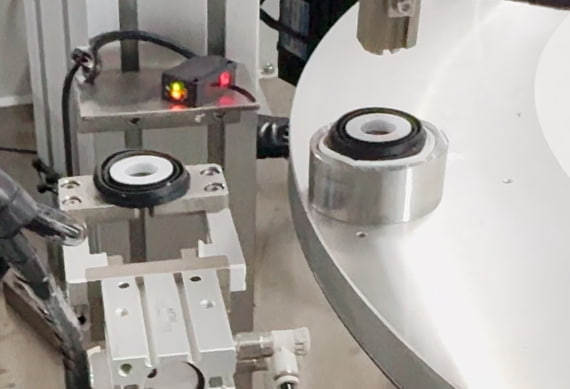
3. Profiled Flexible Tooling, Full-Area Stress Support
We customize profiled positioning jigs and soft pressure heads matching trocar plug and rear cover contours. The full-area fitting support eliminates suspended stress concentration and assembly eccentricity. The soft contact structure avoids hard collision damage to silicone lips, ensuring consistent assembly accuracy and structural integrity of each product.
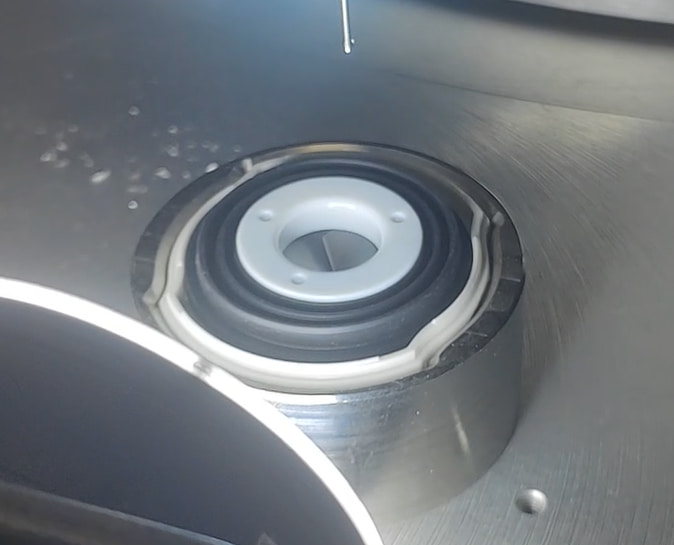
Production Benefits & Application Advantages
Mass production verification proves that our optimized
trocar automatic assembly system completely solves common silicone assembly defects. It significantly reduces scrap rate and manual rework costs, stabilizing batch yield and production efficiency. With no need for product mold modification and workshop transformation, the solution features low landing cost, strong compatibility and stable operation, fully meeting the high-precision and zero-defect production requirements of minimally invasive medical devices.




 IPv6 Network Supported