leave a message
If you are interested in our products and want to know more details,please leave a message here,we will reply you as soon as we can.
Automotive Electronics Component Assembly Machine for Transducer Elements
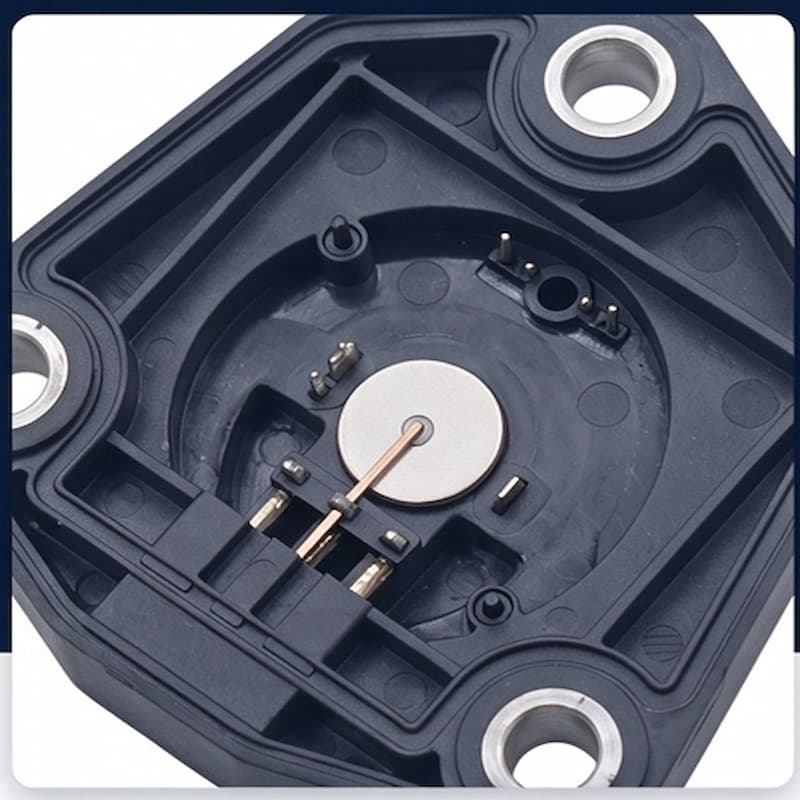
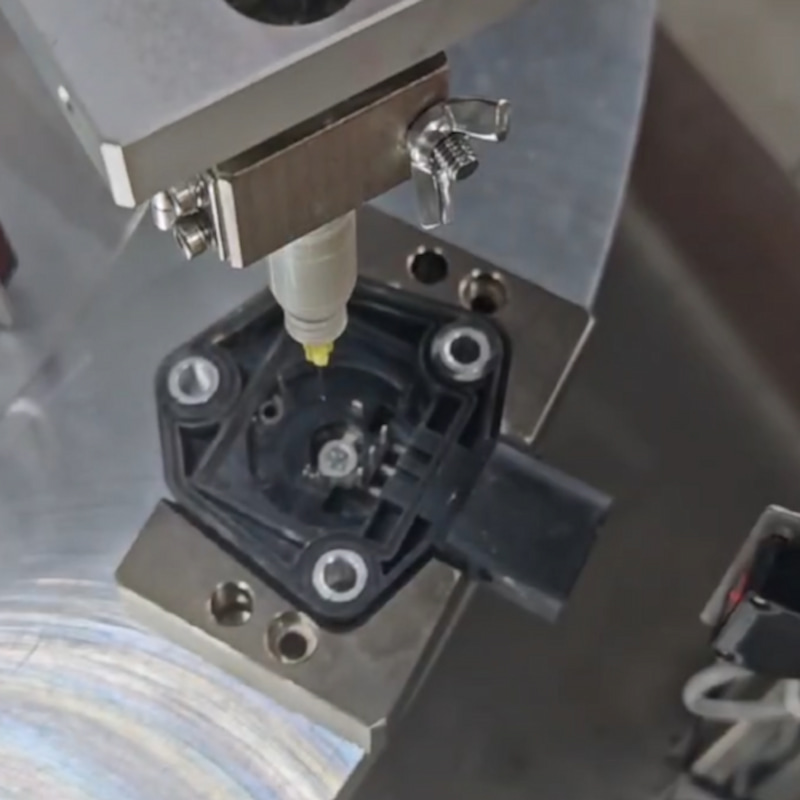
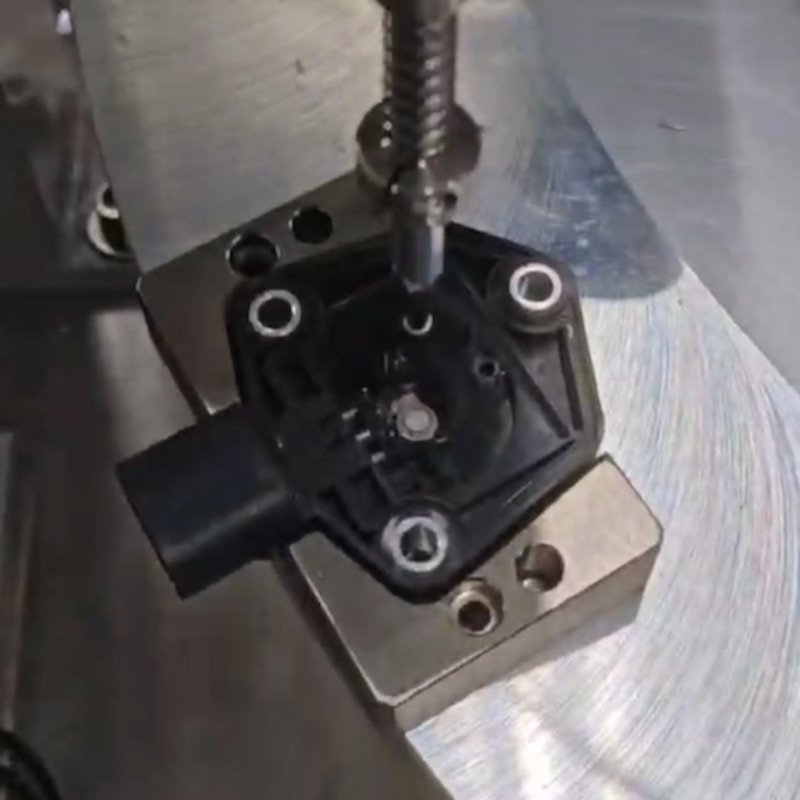
SYNRIT provides custom automated assembly machines for automotive electronics components. The system can integrate silver paste dispensing, automatic transducer element assembly, copper pin cutting and assembly, vision inspection, and automatic rejection for automotive electronics and new energy component production.
ModelNo. :
synrit-xny1Capacity :
1000Operating Personnel :
1compliance rate :
99%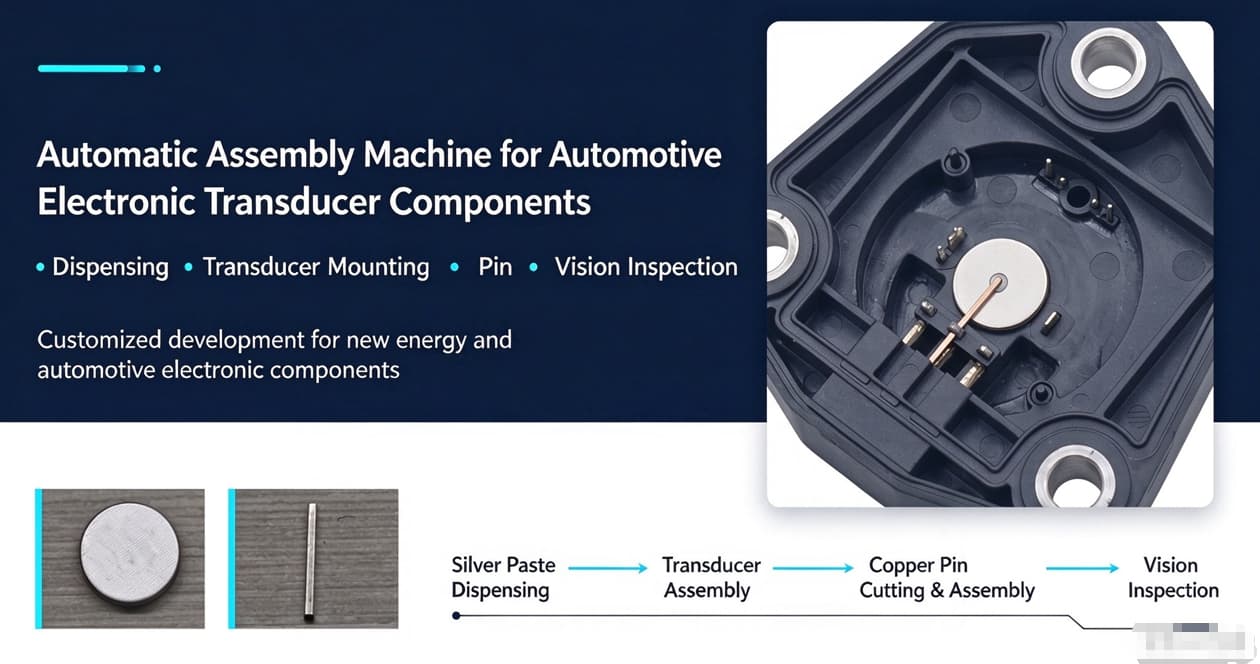
The machine is suitable for automation applications involving automotive electronics and new energy components. Solutions can be evaluated and customized based on product drawings, samples, process requirements, target cycle time, and inspection criteria.
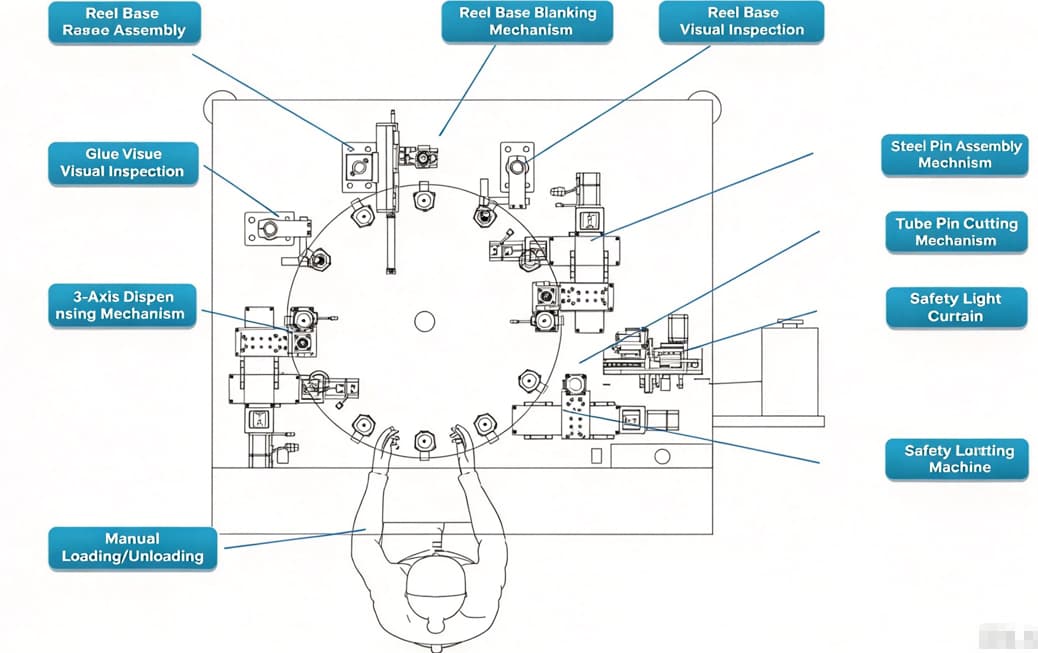
The machine integrates multiple processes to address dispensing, positioning, assembly, and in-process inspection requirements:
Manual housing loading → First silver paste dispensing → Dispensing inspection → Automatic transducer element separation and assembly → Second silver paste dispensing → Dispensing and position inspection → Automatic copper pin feeding, cutting, and assembly → Manual unloading of finished parts
An operator loads the housings and unloads the finished parts. One operator can handle both tasks. Dispensing, transducer element assembly, copper pin cutting and assembly, and inspection are performed automatically.
| Item | Specification |
|---|---|
| Machine name | Automotive Electronics Transducer Component Automatic Assembly Machine |
| First dispensing quantity | 18 mg ± 1.8 mg |
| Second dispensing quantity | Two points, 1 mg ± 0.1 mg per point |
| Transducer element installation accuracy | ±0.1 mm |
| Dispensing system | Three-axis servo dispensing system |
| Paste supply | Servo-driven paste supply |
| Transducer element feeding | Tube-fed, automatic separation |
| Copper pin feeding | Coil-fed, automatic cutting |
| Inspection functions | Dispensed area inspection; transducer element center-position inspection |
| Defective part handling | Automatic rejection |
| Loading and unloading | Manual loading and unloading |
Specification note: The figures above are process settings for the current machine proposal. Cycle time, continuous operation performance, inspection criteria, measurement methods, and acceptance requirements must be confirmed based on customer samples, process requirements, and the technical agreement for the project.
This machine solution may be evaluated by:
Final suitability depends on the product structure, material characteristics, and process requirements.
To support process analysis and machine proposal development, please prepare:
Which processes does the machine perform automatically?
The machine can automatically dispense silver paste, separate and assemble transducer elements, feed and cut copper pins, assemble copper pins, perform vision inspection, and reject defective parts. Under the current proposal, housing loading and finished-part unloading are manual.
How are the transducer elements fed and assembled?
The transducer elements are supplied in tubes. An operator loads a tube into the feeder, after which the machine automatically separates the elements and assembles them using a three-axis servo manipulator.
What inspection functions are currently included?
The current proposal includes inspection of the dispensed paste area and the center position of the transducer element. Defective parts can be automatically rejected. Additional inspection requirements must be evaluated based on the product’s quality criteria and samples.
Can the dispensing quantity and position be adjusted?
Dispensing paths and coordinates are editable. The current settings are 18 mg ± 1.8 mg for the first dispensing operation and 1 mg ± 0.1 mg at each of two points for the second operation. The adjustment range and measurement method must be confirmed through validation based on the silver paste and process requirements.
What is the transducer element assembly accuracy?
The current proposal specifies an installation accuracy of ±0.1 mm. The parameter definition and verification method are subject to the technical agreement and acceptance criteria confirmed by both parties.
How are the copper pins fed and assembled?
Copper pins are supplied from coil stock. The machine feeds and cuts the pins automatically, then uses a manipulator to assemble them. Pin dimensions, cut length, and assembly requirements must be evaluated based on the product drawings.
Can the machine handle multiple product models?
A multi-model solution can be evaluated based on differences in product structure, tooling changeover, dispensing coordinates, and inspection requirements. Model compatibility and changeover time must be confirmed during the project proposal stage.
What is the machine cycle time?
The available information does not include a confirmed cycle time, so no fixed production capacity is stated. SYNRIT can evaluate the cycle time based on the target output, process steps, inspection time, and loading and unloading method. The confirmed cycle time can then be specified in the technical proposal and acceptance documents.
Can the machine be used for new energy vehicle components?
The machine is designed for customized assembly applications in automotive electronics. Its suitability for specific new energy vehicle components can be evaluated based on the product structure and process requirements.
How can I request a machine proposal and quotation?
Please provide product drawings or samples, the current process, target cycle time, inspection requirements, and site layout. SYNRIT can use this information to evaluate the process, develop a machine proposal, and prepare a quotation.
Looking for an automated automotive electronics assembly machine, transducer element dispensing and assembly machine, automotive component automation equipment, or vision inspection machine? Contact SYNRIT and share your product drawings, samples, and process requirements.
SYNRIT can evaluate a custom assembly solution based on product structure, dispensing parameters, assembly accuracy, inspection requirements, and site conditions.



 IPv6 Network Supported
leave a message
Scan to Wechat/Whatsapp :